Learn
The basics, and how I operate
Effective radiated power, why antenna location matters, simplex versus repeater, and some advice for newcomers.
The numbers
Understanding effective radiated power
One of the interesting aspects of radio is the difference between transmitter output power and effective radiated power. My radio transmits approximately 4 watts. The coaxial cable reduces the power that reaches the antenna. The antenna then distributes the available energy according to its radiation pattern. Using the advertised gain of 6.5 dBi, the estimated performance is:
| Measurement | Approximate figure |
|---|---|
| Radio transmitter output | 4.0 W |
| Cable attenuation | 1.4–1.6 dB |
| Power at antenna | 2.8–2.9 W |
| Antenna gain | 6.5 dBi |
| Equivalent isotropic radiated power | 12.5–13 W EIRP |
| Effective radiated power | 7.6–7.9 W ERP |
These calculations are theoretical and assume the stated antenna gain is accurate. The transmitter does not physically generate 13 watts. The EIRP figure expresses the maximum directional field strength relative to an ideal isotropic reference antenna.
Antenna gain and feedline attenuation are both significant parts of the overall radio system.
Location
The importance of my antenna location
My antenna installation is situated in the Porirua area, where the surrounding landscape includes hills, residential buildings and coastal terrain. UHF signals generally benefit from clear paths between antennas. Hills and buildings may obstruct signals, while diffraction and reflections can sometimes allow communication even without a completely clear line of sight.
The antenna’s elevated position helps reduce some local obstructions. This is one reason why outdoor antenna installations can perform considerably better than small antennas used inside buildings.
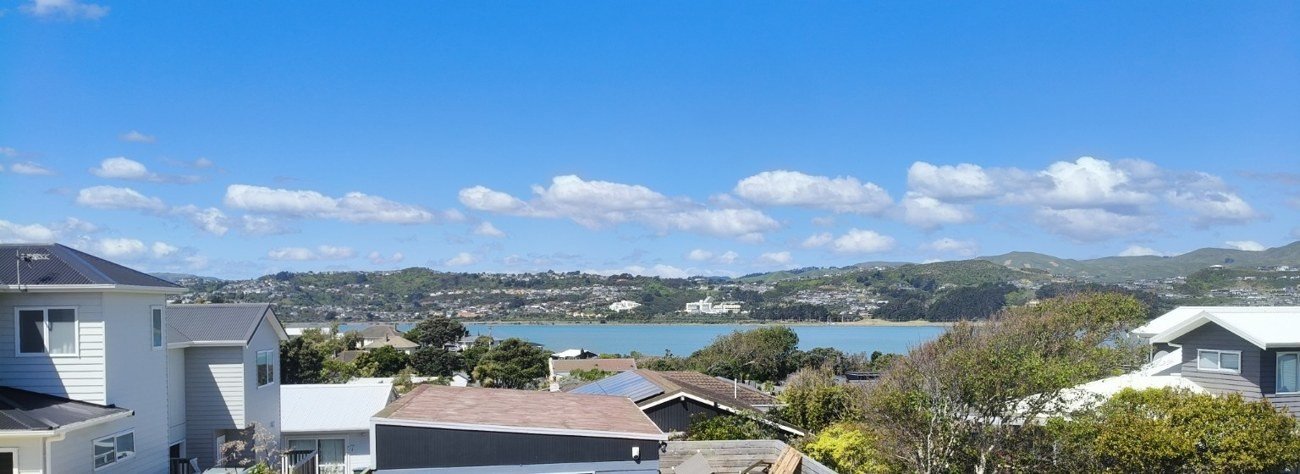
Consider antenna location before concentrating solely on transmitter power.
Modes
Simplex and repeater communication
There are two common ways to communicate using UHF CB radio.
Simplex
Radio A ↔ Radio B
Direct radio-to-radio communication. Both stations transmit and receive on the same frequency. It is useful for nearby stations and direct local conversations.
Repeater
Radio A ↔ Repeater ↔ Radio B
The two radios communicate through an intermediate repeater station, which may extend the area of communication. Repeaters are particularly valuable in areas with hilly terrain.
Repeater availability is not guaranteed, and UHF CB should not be treated as a substitute for dedicated emergency communications.
On the air
My approach to radio communication
I enjoy keeping my radio communications simple, friendly and respectful. I prefer to speak in a natural voice rather than speaking unnecessarily loudly. On PRS radio I identify as Wellington 564 only. My usual call is “Wellington five six four, standing by. Any calls.” This lets other users know I am available for a conversation.
I enjoy the relaxed nature of radio communication. Some operators enjoy lengthy conversations, while others prefer brief contacts or simply listening. I believe everyone should be able to enjoy the hobby in their own way while respecting other channel users.
My channel arrangement is on the My channels page.
Getting started
Advice for newcomers
If you are new to UHF CB radio, a home base station can be a rewarding project. A suitable installation generally consists of a compliant UHF CB transceiver, an appropriate power supply, a correctly installed antenna and a good-quality coaxial cable.
Antenna height, proper mounting, weatherproofing and suitable RF connections are important. It is also worth learning how SWR, cable attenuation, antenna gain and repeaters work.
You do not need extremely high transmitter power to enjoy the hobby. A relatively modest radio installation can perform very well when properly designed and positioned.
Always follow the applicable New Zealand UHF CB/PRS licence conditions and use appropriately compliant equipment. See the NZ rules summary.
Wrapping up
Final thoughts about my station
My UHF CB base station combines a straightforward Oricom transceiver with an outdoor Techoman 6.5 dBi vertical antenna, 10 metres of RG213 cable and an inline Nissei RS-502 SWR/power meter. I have also used an SV4401A Vector Network Analyzer to verify the antenna’s impedance matching. The station has demonstrated useful communication through the Mt Climie UHF PRS repeater.
For me, the enjoyment comes not just from speaking to other radio users, but also from understanding the technical side of radio communication. Testing equipment, learning about radio propagation, improving antenna installations and making friendly contacts are all enjoyable parts of the hobby.
I hope this description provides newcomers with a useful introduction to how a home UHF CB/PRS base station works. Thank you for taking the time to visit my radio station website.
Best wishes, 73, and happy radio communications from Porirua, New Zealand!